
Roofing scams often appear after a storm, during a busy seasonal rush, or when a contractor promises a quick fix for a problem that is difficult to see from the ground. For homeowners in Tonawanda, NY, the safest approach is to slow down, verify claims, and keep control of payment and paperwork.
A trustworthy roofing transaction should leave a clear record of what was observed, what work is proposed, how much it will cost, and who is responsible if something goes wrong. Pressure, vague explanations, and requests for large cash payments are warning signs.
What are the most common roofing scams?
The most common scams involve storm-related door knocking, false damage claims, unusually low bids, incomplete repairs, and demands for immediate payment. Some dishonest operators may also misrepresent insurance coverage or use paperwork that does not clearly identify the contractor.
Common warning signs include:
- A person appears uninvited and claims to have noticed serious roof damage.
- The representative insists that work must begin immediately.
- The price is available only “today.”
- The contractor cannot provide a written scope of work.
- The business name, address, insurance information, or license details are unclear.
- Payment is requested entirely in cash or through an unusual method.
- The contractor offers to waive an insurance deductible.
- A large deposit is demanded before materials, scheduling, or written terms are provided.
- The worker asks the homeowner to sign a blank or incomplete document.
A single warning sign does not automatically prove fraud, but several together deserve careful attention.
Why are storm chasers a particular concern?
Storm chasers travel into areas after wind, hail, or severe weather and look for homeowners who may be worried about visible damage. Some are legitimate contractors who serve multiple regions. Others use the urgency of a storm to sell unnecessary work or collect deposits before disappearing.
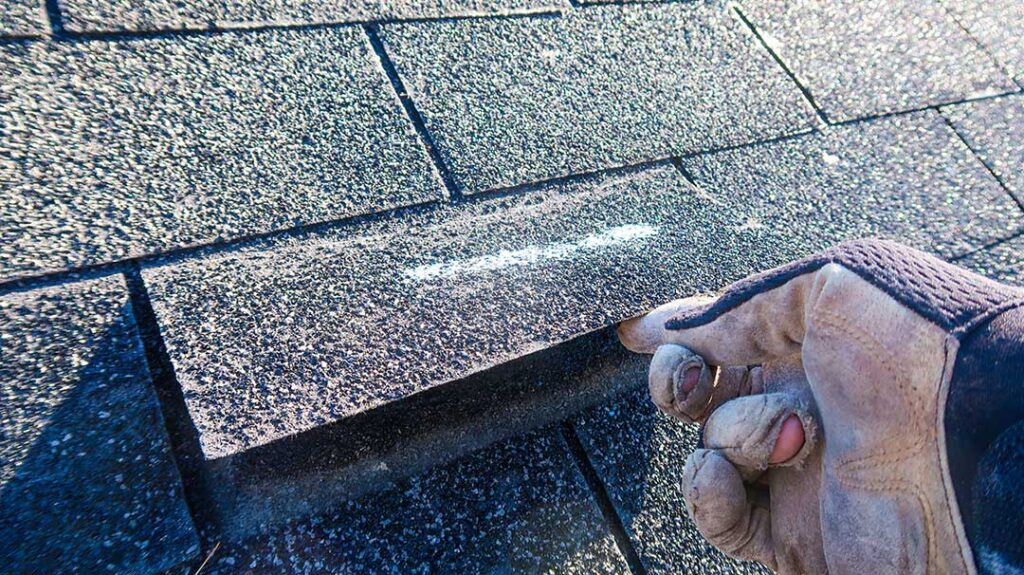
After strong weather, inspect the property from the ground rather than climbing onto the roof. Look for missing shingles, loose flashing, fallen branches, damaged vents, or water stains in the attic and upper rooms. A contractor who claims to have found damage should be able to show clear photographs and explain what each problem means.
Do not allow an unexpected visitor to pressure anyone into signing paperwork at the door. A homeowner can thank the person for the information, ask for written details, and independently verify the business before making a decision.
How can a homeowner verify a roofing contractor?
Verification should happen before signing a contract or paying a substantial deposit. Ask for the contractor’s complete legal business name, physical mailing address, telephone number, proof of liability insurance, and workers’ compensation coverage when applicable.
Check whether the information is consistent across the proposal, invoice, website, business registration records, and insurance documents. A phone number alone is not enough. Be cautious if the contractor uses several business names, refuses to provide insurance documentation, or gives only a first name.
References can also help, but they should be treated as one part of the review rather than proof of quality. Ask references whether the contractor finished on time, handled unexpected conditions honestly, protected landscaping and siding, and responded to warranty concerns.
For work that may require permits or must comply with local requirements, verify the process with the appropriate municipal office before work begins. Permit responsibility should be stated clearly in writing. A contractor who says permits are unnecessary without explaining why may be trying to avoid oversight.
What should a roofing contract include?
A proper contract should describe the work in enough detail that another person could understand what is being purchased. Vague phrases such as “repair roof” or “replace as needed” do not provide enough protection.
Look for:
- The contractor’s legal name and contact information.
- The homeowner’s name and property address.
- A description of whether the work is a repair, partial replacement, or full replacement.
- The roofing materials, underlayment, flashing, ventilation components, and accessories to be used.
- The method for handling rotten decking or concealed damage.
- Cleanup and disposal responsibilities.
- Start and estimated completion dates.
- Total price, deposit amount, payment schedule, and acceptable payment methods.
- Warranty terms, including who provides each warranty.
- Change-order procedures requiring written approval before extra work is performed.
- Information about permits and inspections, if applicable.
Read every page before signing. Do not sign documents with blank spaces that could later be filled in. Keep copies of the contract, photographs, messages, receipts, insurance certificates, and payment records in one file.
Is a very low roofing bid a good deal?
An unusually low bid may reflect missing work rather than genuine savings. A proposal can look inexpensive because it excludes tear-off, disposal, flashing replacement, ventilation corrections, decking repairs, or cleanup.
Compare proposals by scope, not just by total price. If one contractor includes removal of old roofing and another assumes new material will be installed over existing layers, the prices are not directly comparable.
Ask what happens if damaged decking is found after the old roofing is removed. The contract should state the unit price or approval process for that situation. Without this information, a homeowner may face a large unexpected charge after the work has started.
A high bid is not automatically reliable either. Clear documentation and reasonable payment terms matter more than a dramatic promise or a low headline number.
How do insurance-related roofing scams work?
A contractor cannot guarantee that an insurer will approve a claim. The insurer determines coverage based on the policy, documented damage, exclusions, and claim review.
Be cautious if a contractor:
- Says the entire roof will definitely be paid for before an inspection.
- Offers to falsify the cause or age of damage.
- Asks the homeowner to sign over insurance benefits without fully explaining the document.
- Promises to waive the deductible.
- Tells the homeowner not to speak directly with the insurer.
- Inflates the invoice or proposes unrelated work as part of a claim.
The homeowner should report damage accurately, keep photographs, and review all insurance paperwork. If a contractor and insurer disagree about the scope of work, request written explanations rather than relying only on verbal assurances.
What payment practices reduce the risk of a scam?
Avoid paying the full contract price before the work is completed and inspected. A reasonable payment schedule should connect payments to defined stages, such as delivery of materials or completion of agreed work.
Use traceable payment methods and keep receipts. Be especially careful with requests for cash, wire transfers, gift cards, cryptocurrency, or payment to an individual whose name does not match the contracting business.
A deposit may be customary, but it should be proportionate to the project and clearly documented. If the contractor refuses to begin without an unusually large payment, seek another written proposal before proceeding.
What should residents do if a roofing scam is suspected?
Preserve all evidence, including contracts, text messages, photographs, names, license or insurance claims, invoices, and payment records. Do not continue signing documents or making payments simply because the contractor says the matter is urgent.
For suspected fraud, deceptive business practices, property damage, or unsafe work, residents may need to contact the appropriate local, state, consumer-protection, licensing, or law-enforcement authority. If immediate hazards exist—such as exposed electrical components, unstable roofing materials, or active water intrusion—keep people away from the area and address the safety risk first.
The most reliable protection is a pause between the sales pitch and the decision. Independent verification, a detailed written contract, controlled payments, and accurate insurance reporting make it much harder for a dishonest operator to take advantage of a homeowner.
